

Jason Smith is a trusted water heater repair specialist based in Lakewood, California. He specializes in diagnosing, repairing and replacing tank and tankless water heaters from leading brands.
Nearly 20% of a typical household’s energy bill goes toward heating water — making your choice between a tank and tankless system one of the most financially significant home decisions you can make. For Lakewood homeowners weighing their options in 2026, understanding the real differences between these two technologies is essential before committing to an installation.
Quick Answer: Tank water heaters cost less upfront and work well for larger households with consistent hot water demand, while tankless units offer greater long-term energy efficiency and a longer lifespan. The right choice depends on your home’s size, budget, existing infrastructure, and how long you plan to stay in the property.
Key Takeaways
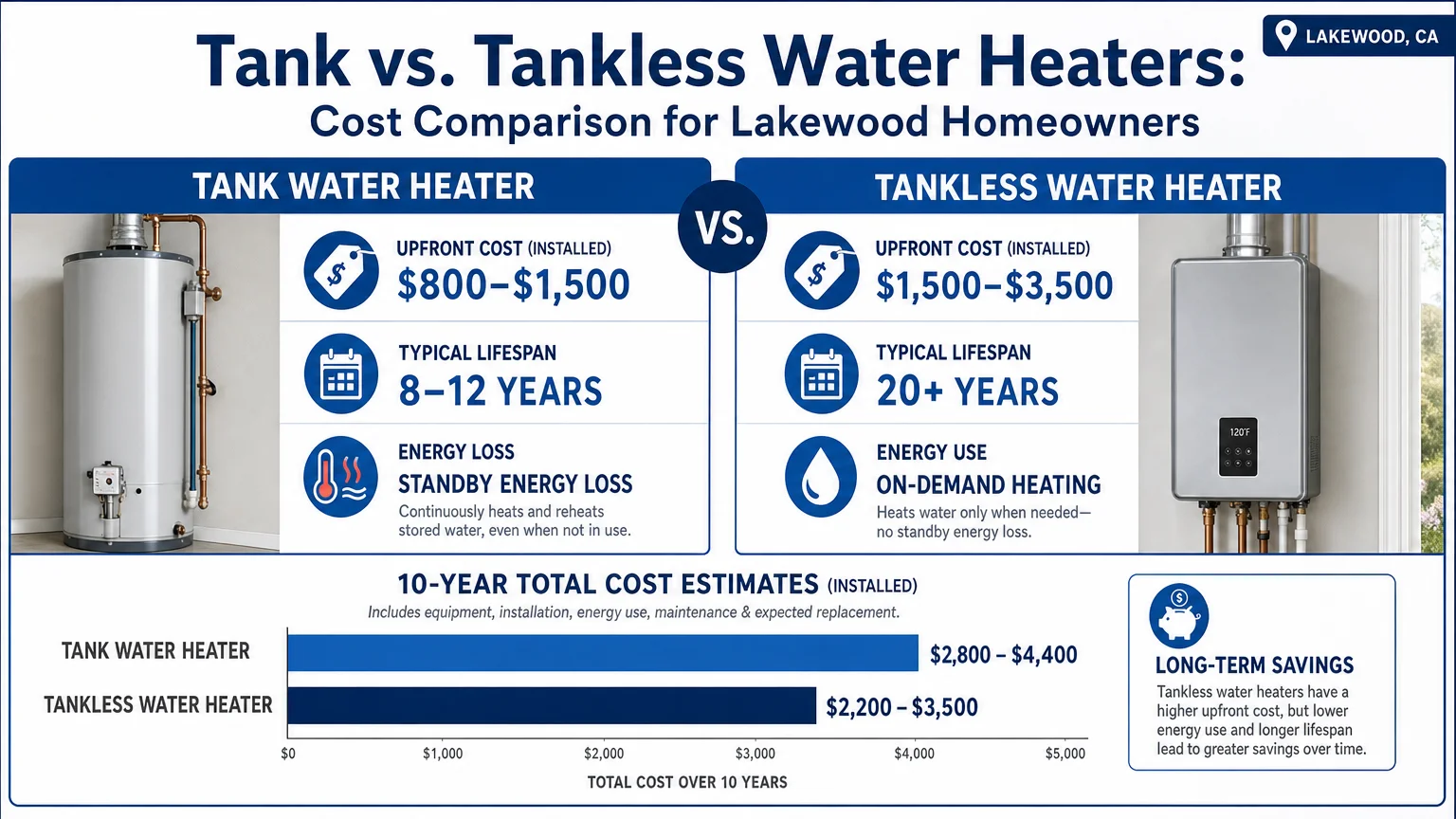
- Tank water heaters typically cost $800–$1,500 installed; tankless units range from $1,500–$3,500 or more depending on fuel type and complexity.
- Tankless water heaters last 20+ years on average; traditional tank units average 8–12 years.
- Tank heaters lose energy continuously through standby heat loss; tankless units only heat water when it’s needed.
- Lakewood’s mild Southern California climate reduces some seasonal efficiency concerns, but hard water mineral buildup remains a factor for both system types.
- Gas-powered tankless units generally outperform electric models in high-demand households.
- Switching from tank to tankless may require upgrades to gas lines, venting, or electrical panels — costs that should factor into your budget.
- Both system types are available through professional installation services serving Lakewood and surrounding communities including Bellflower, Cerritos, and Norwalk.
- A qualified local technician can assess your home’s specific needs before you invest.
What Are the Core Differences Between Tank and Tankless Water Heaters?
The fundamental distinction is straightforward: tank water heaters store and continuously heat a reservoir of water (typically 30–80 gallons), while tankless units heat water on demand as it flows through the system. This difference in design drives nearly every other comparison — cost, efficiency, space, and lifespan.
Tank models have been the residential standard for decades. They’re widely understood, relatively simple to install, and compatible with most existing home plumbing configurations. Tankless systems, by contrast, require more precise installation — particularly when switching fuel types or upgrading aging infrastructure — but they deliver measurable long-term advantages for the right household.
For Lakewood homeowners, the choice often comes down to a practical question: are you optimizing for lower upfront cost and simplicity, or for long-term efficiency and reduced replacement frequency?
How Do Upfront and Long-Term Costs Compare for Lakewood Homeowners?
Cost is typically the first factor homeowners evaluate, and it’s worth separating upfront installation costs from total ownership costs over time.
Tank water heaters generally range from $800 to $1,500 fully installed for a standard 40–50 gallon gas or electric unit. They’re less expensive to purchase, and installation is straightforward in most Lakewood homes already set up for this type of system.
Tankless water heaters carry higher upfront costs — typically $1,500 to $3,500 or more depending on fuel type, flow rate capacity, and whether infrastructure upgrades (gas line resizing, new venting, or electrical panel work) are required. However, because tankless units eliminate standby heat loss and last significantly longer, many homeowners recover the cost difference over time through reduced energy bills and deferred replacement costs.
If you’re planning to stay in your Lakewood home for 10 or more years, the math often favors a tankless upgrade. If you need a fast, budget-conscious replacement, a quality tank unit remains a sound choice — particularly for larger households with simultaneous hot water demands.
What Are the Installation Requirements for Tankless Units in Lakewood?
Installing a tankless water heater is more involved than swapping out a tank unit, and understanding those requirements upfront prevents budget surprises.
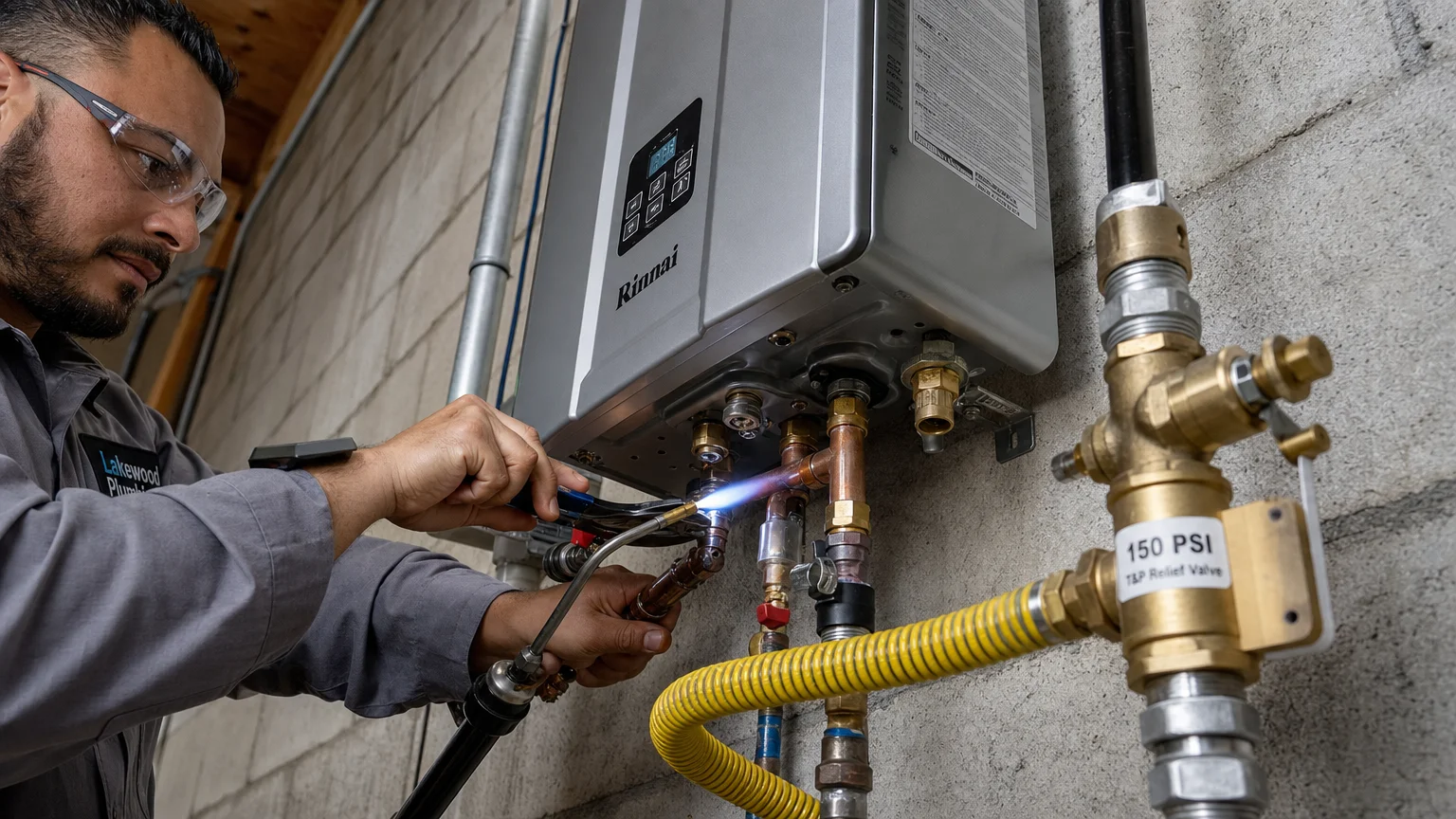
Gas-powered tankless units typically require a dedicated, higher-capacity gas line — often larger than what fed the previous tank heater. They also need proper venting to the exterior, which may mean new vent pipe runs in some homes. Electric tankless units avoid the venting issue but frequently require a panel upgrade to handle the significant electrical load, which adds cost.
In Lakewood and surrounding communities, permit requirements apply to water heater installations. Working with a California Licensed Plumbing Contractor ensures the job meets local code and passes inspection — protecting both your investment and your home’s resale value. Our Tankless Water Heater Installation service connects Lakewood homeowners with experienced local technicians who handle permitting, code compliance, and proper setup from start to finish.
How Does Each System Handle Lakewood’s Water and Climate Conditions?
Lakewood’s Southern California location means mild temperatures year-round, which reduces the cold-weather performance concerns that affect tankless units in colder climates. However, local water quality is a relevant factor for both system types.
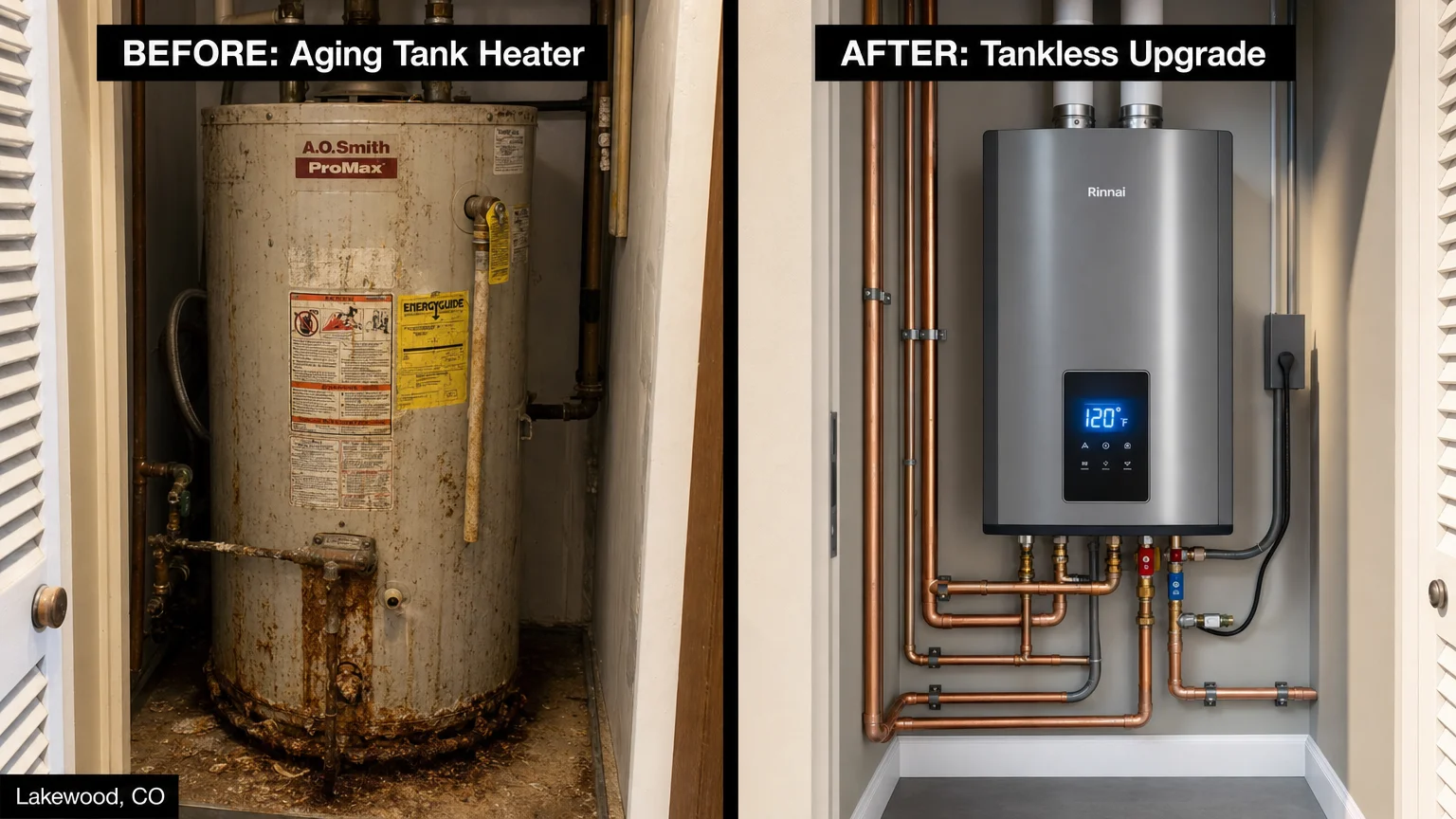
Southern California water is notably hard, with elevated mineral content that accelerates sediment buildup inside tank heaters and scale accumulation on tankless heat exchangers. Left unaddressed, this reduces efficiency and shortens equipment life regardless of which system you choose. Annual flushing for tank units and periodic descaling for tankless units are both recommended maintenance practices.
For homeowners who’ve noticed reduced hot water output, unusual noises from their current unit, or a unit that’s more than 10 years old, these are often signs that sediment or scale has already compromised performance. Our Water Heater Leak Diagnosis in Cerritos team regularly identifies mineral buildup as a contributing factor in premature unit failure across the region.
Tank vs. Tankless: Side-by-Side Comparison
| Feature | Tank Water Heater | Tankless Water Heater |
|---|---|---|
| Upfront Cost | $800–$1,500 installed | $1,500–$3,500+ installed |
| Lifespan | 8–12 years | 20+ years |
| Energy Efficiency | Lower (standby heat loss) | Higher (on-demand only) |
| Hot Water Supply | Limited by tank size | Continuous (flow-rate dependent) |
| Space Required | Larger footprint | Wall-mounted, compact |
| Installation Complexity | Low–moderate | Moderate–high |
| Maintenance | Annual flush recommended | Annual descaling recommended |
| Best For | Budget-conscious, large households | Long-term savings, smaller households |
Which System Is Better for Larger Households or High-Demand Properties?
Household size and simultaneous hot water usage are critical variables. A family of five running a dishwasher, shower, and washing machine at the same time places very different demands on a water heater than a single occupant or couple.
Tank heaters handle simultaneous demand well up to their storage capacity. A 50-gallon tank can support multiple fixtures running at once — until the reservoir is depleted, at which point recovery time becomes a factor.
Tankless units heat water continuously but are rated by flow rate (measured in gallons per minute). A single whole-home tankless unit may struggle to supply three simultaneous high-flow fixtures. In those cases, either a high-capacity unit or a multi-unit setup is the solution — both of which increase installation cost.
For landlords and property managers overseeing multi-unit properties in Lakewood, Bellflower, or Paramount, this distinction is especially important. Our team at Residential Water Heater Solutions in Bellflower regularly advises property owners on sizing and system selection for multi-tenant buildings.
How Do You Choose the Right System for Your Lakewood Home?
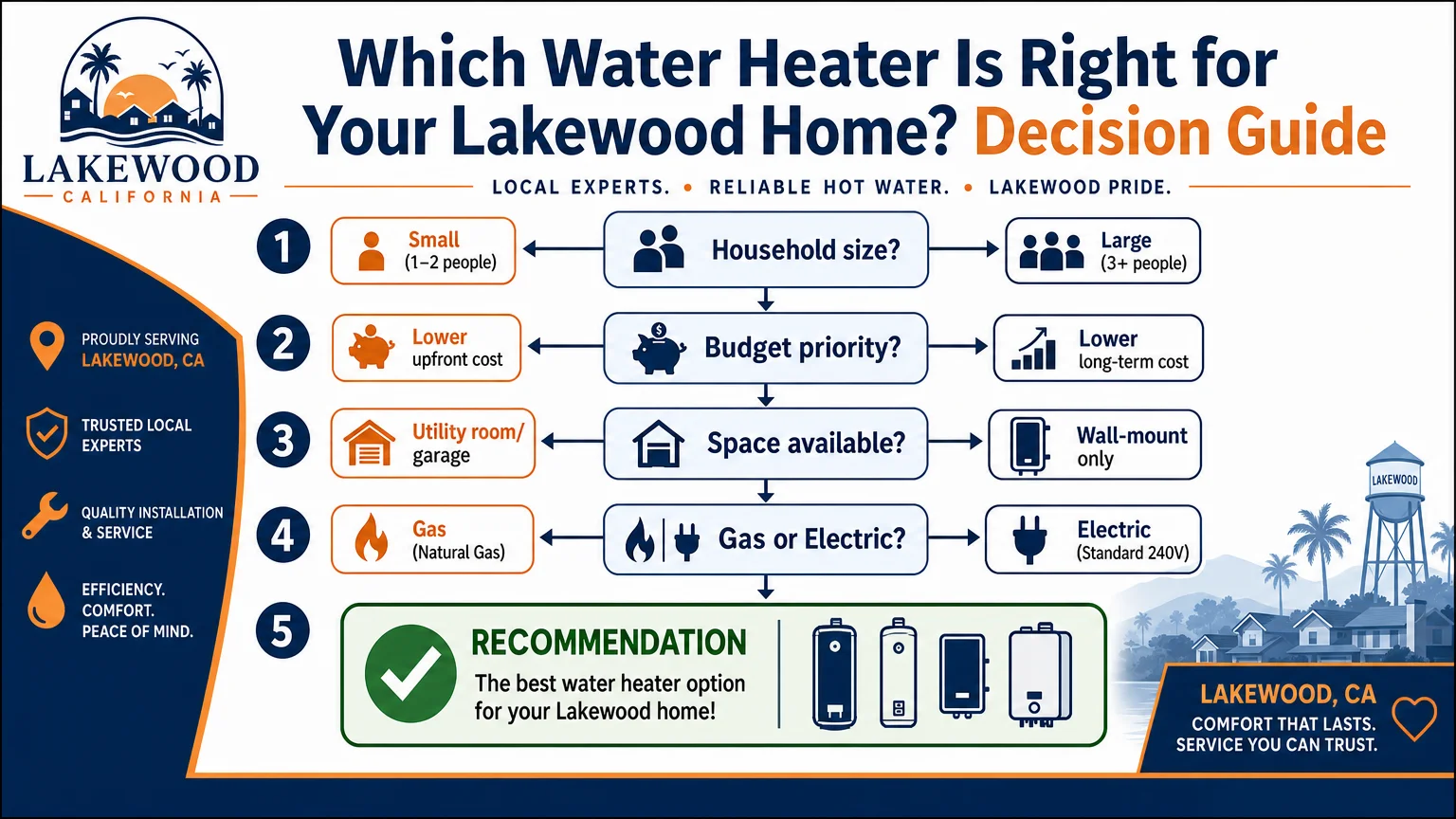
The decision framework is practical. Consider these factors in order:
- How long will you stay in the home? Longer tenure favors the higher upfront investment of a tankless unit.
- What is your household size and daily hot water demand? Larger families with simultaneous usage may benefit from a high-capacity tank or a properly sized tankless system.
- What infrastructure does your home currently have? If your home already has a large-diameter gas line and proper venting, tankless conversion is simpler. If significant upgrades are needed, factor those costs in.
- What is your budget for installation? If you need a same-day emergency replacement, a tank unit is typically faster to source and install.
- Are you prioritizing energy savings? Tankless units deliver meaningful efficiency gains, particularly for households that use moderate amounts of hot water.
For homeowners in Cerritos, Norwalk, or Hawaiian Gardens, our local teams offer the same assessment process. See our Water Heater Installation in Cerritos and Water Heater Installation in Hawaiian Gardens pages for area-specific service details.
Making the Right Choice for Your Lakewood Home
Choosing between a tank and tankless water heater is not a one-size-fits-all decision. The right system depends on your household’s size, budget, infrastructure, and long-term plans — factors that a qualified local professional can evaluate quickly and accurately.
Water Heater Repair Lakewood connects homeowners throughout Lakewood, Bellflower, Cerritos, Paramount, and surrounding communities with experienced technicians who provide transparent pricing, quality workmanship, and fast response times. Whether you’re planning a proactive upgrade or facing an unexpected failure, the team is ready to help you move forward with confidence.
Ready to find the right water heater for your home? Contact Water Heater Repair Lakewood today for a straightforward assessment and same-day service when available.
Frequently Asked Questions
How long does a tankless water heater last compared to a tank unit?
Tankless water heaters typically last 20 years or more with proper maintenance. Traditional tank water heaters average 8–12 years. This lifespan difference is one of the primary reasons many homeowners find the higher upfront cost of a tankless unit worthwhile over time.
Can I switch from a tank to a tankless water heater in my Lakewood home?
Yes, but the conversion requires professional installation and may involve upgrades to your gas line, venting system, or electrical panel depending on the unit type. A qualified local technician can assess your home's existing infrastructure and provide an accurate cost estimate before any work begins.
Is a tankless water heater worth the extra cost?
For homeowners planning to stay in their home for 10 or more years, the answer is often yes. Reduced energy bills from eliminating standby heat loss, combined with a longer equipment lifespan, typically offset the higher installation cost over time. For short-term situations or tight budgets, a quality tank unit remains a reliable choice.
What size tank water heater does my Lakewood home need?
A general guideline: a 30–40 gallon tank suits 1–2 people, a 40–50 gallon tank works for 3–4 people, and households of 5 or more typically need 50–80 gallons. A professional assessment accounts for your actual usage patterns, which can vary significantly.
How often should a water heater be serviced in Southern California?
Annual maintenance is recommended for both tank and tankless units in Southern California. Lakewood's hard water accelerates sediment and scale buildup, making regular flushing (for tank units) and descaling (for tankless units) important for maintaining efficiency and extending equipment life.
What happens if my water heater fails unexpectedly?
Same-day emergency water heater service is available for Lakewood homeowners and surrounding areas. If your unit has stopped producing hot water, is leaking, or is making unusual noises, contact a local professional promptly to assess whether repair or replacement is the appropriate course of action.
Does Water Heater Repair Lakewood handle both gas and electric water heaters?
Yes. Services cover gas water heater replacement, [electric water heater replacement in Lakewood](/electric-water-heater-replacement-in-lakewood), and tankless installations for both fuel types. Technicians work with all major brands and can advise on the best system for your home's existing setup.
Jason Smith is a trusted water heater repair specialist based in Lakewood, California. He specializes in diagnosing, repairing and replacing tank and tankless water heaters from leading brands.